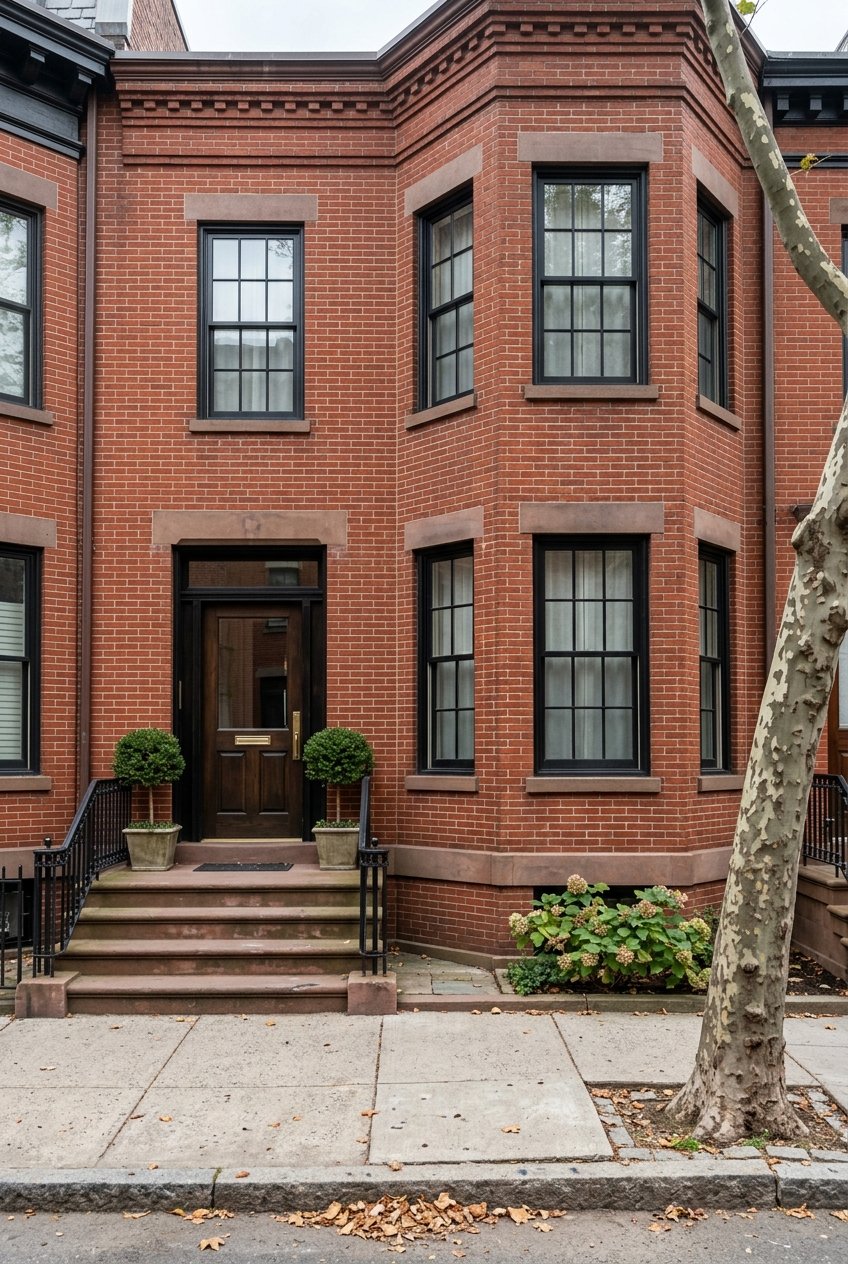
Cambridge Luxury Townhome Pricing Strategies That Work
June 4, 2026
June 4, 2026
If you own a luxury townhome in Cambridge, one pricing mistake can cost you weeks on market and real leverage. That is especially true in a city where attached homes do not always fit neatly into one category. You need more than a broad market average to price well, and this guide will show you what matters most so you can launch with confidence. Let’s dive in.
Cambridge does not report townhouses as a separate category in its official market-rate sales dataset. For 2024, the city reported median sale prices of $2,315,000 for single-family homes, $1,542,500 for two-family homes, $1,822,500 for three-family homes, and $870,000 for condominiums. Those numbers are useful context, but they are not enough to price a luxury townhome on their own.
That is because Cambridge townhomes often sit between categories. Depending on legal structure, an attached home may compete with fee-simple houses, condo conversions, or small attached developments. In practice, that means your pricing strategy has to start with the right comp set, not the citywide median.
Current Cambridge townhouse inventory shows 17 active townhouses with a median listing price around $1.99 million. Homes are typically on the market about 17 days and receive about 3 offers. That tells you buyers are still active, but they are also making choices quickly.
The broader Cambridge market gives helpful background, too. Citywide, the median listing price is about $1.03 million, the median price per square foot is about $950, the median days on market is 25, and the average sale-to-list ratio is 98%. For luxury townhomes, though, the real story usually comes from neighborhood-level behavior, finish quality, and legal form.
A strong pricing strategy for a Cambridge luxury townhome usually starts with a narrow comparison group. You want to look at homes that closely match your property in the areas buyers care about most.
That often includes:
In Cambridge, this step matters more than usual. Zoning allows semi-detached townhouse and rowhouse dwellings in certain residence districts, and the market may value attached homes differently depending on whether they function more like a house or more like a condo. If you skip that nuance, you risk pricing too high or leaving money on the table.
Luxury buyers in Cambridge do not pay the same for every premium address. They tend to respond strongly to how a home shows, how updated it feels, and whether the finishes match the asking price.
Recent sales examples support that point. In Harvard Square, a 2,305-square-foot home at 12 Gerry St #12 sold 16% over list after 35 days, while a larger 4,379-square-foot property at 12 Ash Street Place sold 12% under list after 105 days. In Riverside, 527 Franklin Street sold 8% under list after 39 days, and 950 Massachusetts Avenue #504 sold 6% under list after 212 days.
The lesson is simple. Size and location matter, but presentation and realistic pricing matter just as much. If your home is move-in ready and the pricing is disciplined, buyers may compete. If the condition feels out of sync with the number, the market can push back.
Price per square foot is a useful benchmark, but it should never be the whole strategy. Cambridge’s citywide median listing price per square foot is about $950. At the zip code level, pricing is around $928 per square foot in 02138 and about $998 per square foot in 02139.
Those numbers help frame the market, especially in Harvard-adjacent and transit-rich areas. Still, a luxury townhome is not a spreadsheet exercise. Buyers will adjust quickly for layout, ceiling height, natural light, private outdoor space, parking, and renovation quality.
That is why price per square foot works best as a checkpoint, not a final answer. A skilled valuation process uses it to test the list price, then adjusts for the features that make your home more or less competitive.
Cambridge has two historic districts and four neighborhood conservation districts. The city notes that these areas exist to preserve architecturally and historically significant buildings, and visible exterior changes in neighborhood conservation districts are subject to review.
For sellers, that creates a two-sided pricing story. Historic character can absolutely strengthen buyer appeal because many buyers want authentic Cambridge architecture and period detail. At the same time, exterior changes may face review, and demolition permit applications for structures more than 50 years old may require additional review or a hearing.
If your townhome sits in one of these areas, the designation should be part of the pricing conversation from the start. It may support value through character and scarcity, but buyers also expect the list price to reflect any practical limits on future exterior work.
Cambridge’s transportation network remains a major part of its value story. The city has 27 MBTA bus routes, a commuter rail station, and 6 stations on the MBTA Red and Green Lines. Harvard Square and Central Square are both described by the city as major transit anchors, and the city also highlights connectors like EZRide, the Alewife Loop, and the M2 shuttle.
For luxury townhomes, that matters more than many sellers assume. Buyers often place a premium on homes near Harvard Square, Central Square, Kendall/MIT, Porter, and Alewife because daily convenience is part of the lifestyle they are buying. A well-located townhome may command stronger interest, but only if the initial price reflects that advantage realistically.
Not every Cambridge submarket behaves the same way. Harvard Square, for example, remains one of the city’s stronger premium submarkets. Recent neighborhood data indicates homes there have sold in about 9 days and around 3% above list over the last 9 months, though the sample size is small enough that one month of data can be volatile.
Riverside is also competitive, with homes going pending in around 18 days and selling about 1% above list on average. But recent individual sales in Riverside also show multiple homes closing below list after longer marketing periods. That is a good reminder that even in active neighborhoods, aspirational pricing can still backfire.
When you price a luxury townhome, broad headlines are not enough. The better move is to study what buyers are actually rewarding in your immediate submarket right now.
If you want to maximize your outcome, your pricing plan should be both precise and realistic. In a market like Cambridge, the goal is not to test the ceiling and hope. The goal is to position your home so the best buyers recognize value quickly.
A disciplined pricing process usually includes:
That last point is where many pricing strategies succeed or fail. Cambridge buyers are still willing to pay close to asking when a property fits the submarket. But when a home launches too high, the market often responds with longer days on market, weaker leverage, and price reductions.
The first pricing decision is often the most important negotiation decision in the entire sale. When your home enters the market at the right number, you create urgency, increase showings, and improve the odds of strong offers. When the price overshoots, buyers may hesitate, compare more aggressively, and wait for a reduction.
In Cambridge’s luxury townhome segment, that difference can be significant. With active inventory spanning roughly $1.9 million to $3.85 million, buyers are already comparing size, design, location, and legal structure very carefully. Strategic pricing helps your property stand out for the right reasons.
That is where experienced guidance matters. A strong advisor does not just pull comps. He builds a pricing case that fits your property, your timing, and the behavior of buyers in your part of Cambridge.
If you are thinking about selling a luxury townhome in Cambridge, pricing is too important to leave to citywide averages or guesswork. Guy Contaldi offers valuation guidance, premium listing presentation, and negotiation-focused representation designed to help you position your home with precision from day one.
Stay up to date on the latest real estate trends.
Whether buying, selling, or investing, I’m ready to put my decades of experience and client-first approach to work for you. Contact me today to get started with a trusted Boston real estate expert.