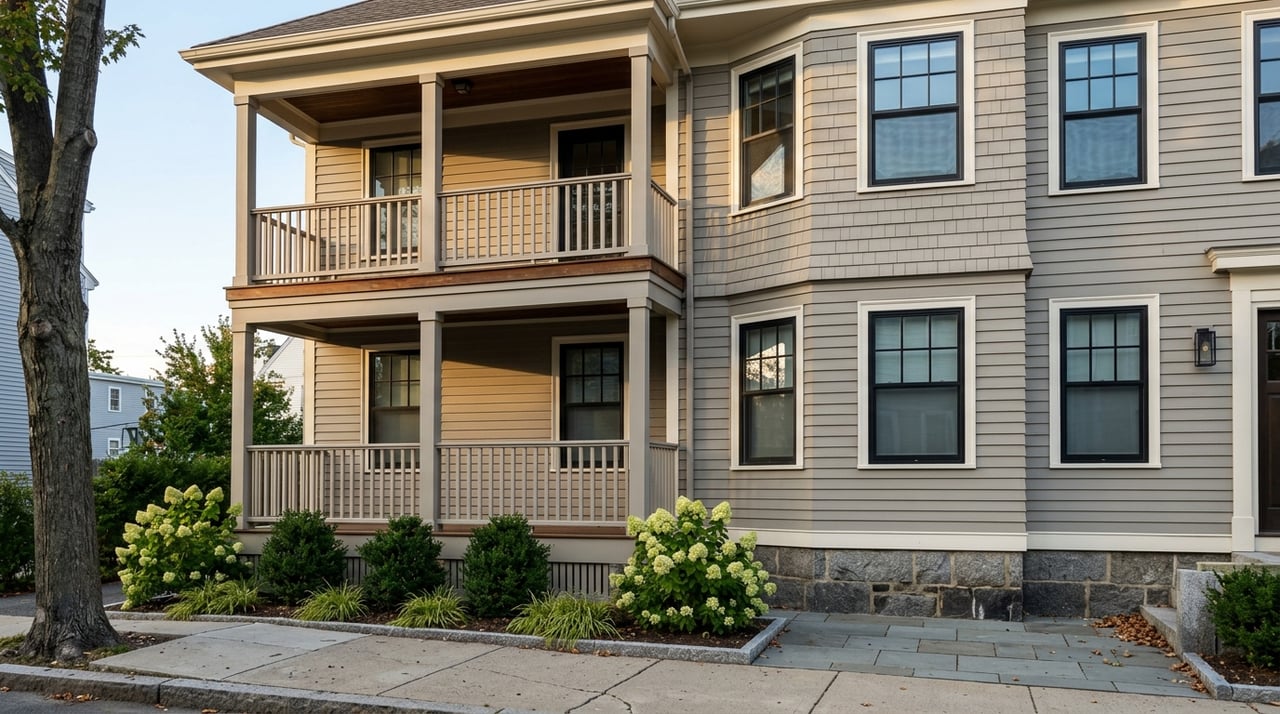
Somerville Multifamily Market Outlook for Small Investors
June 25, 2026
June 25, 2026
Wondering whether a Somerville two-family or three-family still makes sense at today’s prices? You are not alone. Small investors are looking at a market with tight vacancy, strong transit demand, and older housing stock that can create both opportunity and extra cost. This guide breaks down what the current Somerville multifamily outlook means for your next move, what to underwrite carefully, and where discipline matters most. Let’s dive in.
Somerville is not a city where small multifamily is a niche product. According to the city’s 2025 housing needs assessment, 27.7% of housing units are duplexes and 26.8% are in 3- or 4-unit buildings. Together, that means 54.5% of the housing stock sits in the small multifamily category.
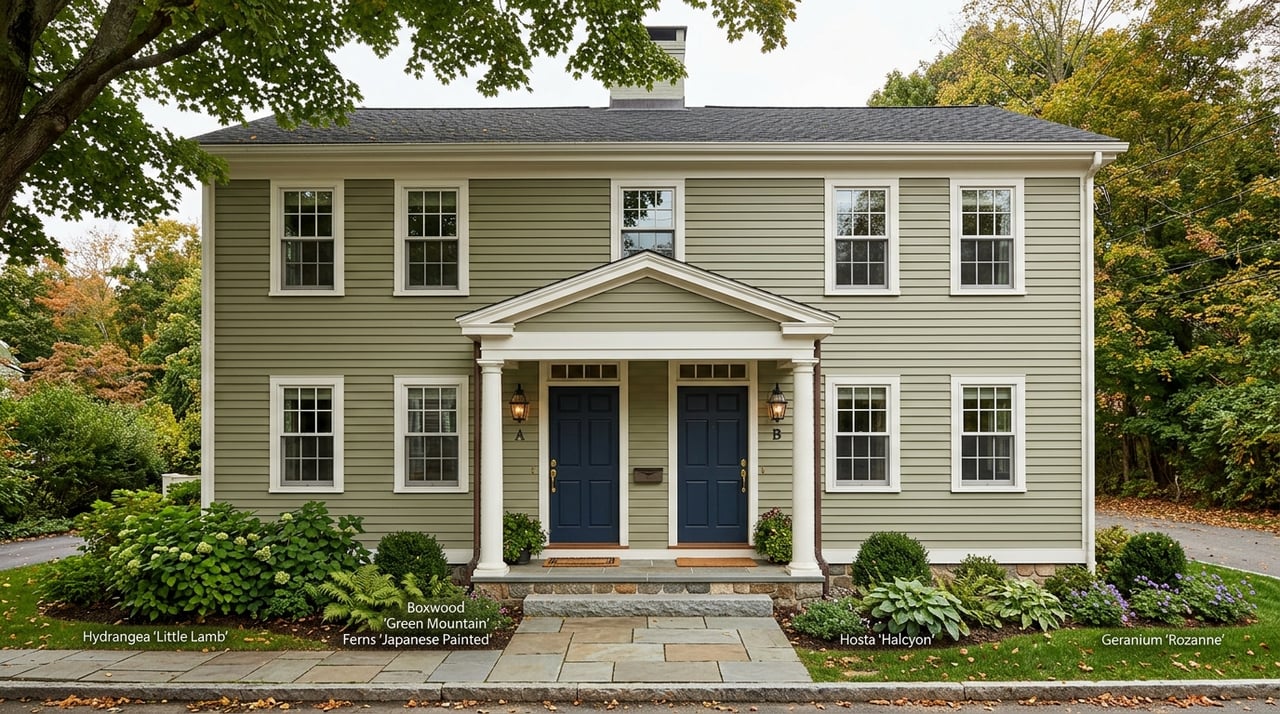
That matters if you are a small investor. In Somerville, two- and three-family homes are part of the city’s established housing fabric, not an edge case. The zoning framework also supports that pattern in Neighborhood Residence areas, where one-, two-, and three-unit buildings are part of the intended form.
If you are shopping for a deal, the numbers suggest you should expect competition. Redfin’s current multifamily snapshot shows 57 active multifamily listings with a $1.5 million median listing price. Broader city market data show a $1,049,372 median sale price, roughly 21 days on market, and a 100.6% sale-to-list ratio over a recent three-month period.
Those figures point to a market where sellers still hold meaningful leverage. For you, that means success often comes from careful property selection and sharp underwriting, not from assuming every listing has easy negotiating room built in.
One reason Somerville remains attractive is that new supply is not flooding the small-building segment. The city’s housing needs assessment says most newer residential development is clustering around places like Assembly Square, East Somerville, west Magoun Square, Union Square, south Spring Hill, Duck Village, Boynton Yards, and Twin City.
In practice, that suggests much of the new inventory is coming from larger mixed-use projects rather than a broad wave of newly built two- and three-family properties. For small investors, existing stock remains the core opportunity set.
Somerville’s rental appeal is closely tied to mobility. The city reports that more than half of commuters get to work by walking, biking, or public transportation, and 18% use public transit. Somerville also reports more than 30 miles of bike infrastructure and a Walk Score of 89 out of 100.
That transit-oriented profile supports steady demand for well-located rentals. The city also treats projects within 0.5 miles of an MBTA station as close enough to require transit analysis, which is a useful local signal that rail access matters.
Walkable commercial areas and transit-served districts can strengthen rentability. The city highlights areas such as Davis Square, Ball Square, Magoun Square, Union Square, and Assembly Row as distinct walkable neighborhoods with their own mix of housing and businesses.
For an investor, that does not mean every property near these areas performs the same way. It does mean location quality in Somerville is often tied to practical access, daily convenience, and transportation options rather than just lot size or parking count.
Current rent trackers place Somerville in the low-to-mid $3,000s, though the exact figure varies by source and unit type. Apartments.com reports an average apartment rent of $3,396, with $3,396 for a one-bedroom, $4,098 for a two-bedroom, and $4,094 for a three-bedroom. Zumper and Zillow place all-bedroom averages at $3,550 and $3,750, respectively.
Because the methodologies differ, it is smarter to treat these as a range instead of a single pricing rule. If you are evaluating a property, your rent assumptions should match the unit mix, layout, condition, and location rather than relying on a headline average.
Somerville’s housing needs assessment notes that renter stock is mostly one- and two-bedroom units, while owner stock is largely two- to three-bedroom units. The city also has a smaller share of 3+ bedroom units than Middlesex County or Massachusetts overall.
That points to a practical takeaway. A two- or three-family with efficient 2- to 3-bedroom layouts may align better with local demand than a building with awkward room counts or chopped-up floor plans. In a market this competitive, functional layouts can matter just as much as finishes.
Much of Somerville’s housing stock is older. The city reports that most owner-occupied homes and about half of rental units were built before 1940. That age profile often creates room for improvement through renovation and repositioning.
Common value-add paths may include:
In other words, upside in Somerville is often found in execution, not in assuming easy expansion or brand-new construction economics.
The same age profile that creates opportunity can also create cost and risk. Lead compliance is one of the biggest examples. Massachusetts Lead Law requires removal or covering of lead hazards in homes built before 1978 where children under 6 live, and the state also requires lead-risk notification when pre-1978 homes are sold or rented.
If you are modeling renovation returns, this cannot be treated as a minor line item. On older Somerville assets, compliance work and related timelines can materially affect your budget and leasing plan.
Somerville also warns that flooding can lead to wet basements and sewer backflow, and that more intense rainstorms are increasing flood frequency. The city further notes that standard homeowner and renter insurance policies do not include flood insurance.
That makes lower-level units, basements, and utility areas especially important during due diligence. If a building’s income depends on lower-level space functioning without interruption, flood resilience deserves early attention.
Parking may not be the first thing you underwrite, but in Somerville it should not be an afterthought. The city divides Somerville into eight resident parking zones and charges $40 for a residential permit. The city also notes that a permit does not guarantee a parking space.
For some households, that may be manageable. For others, especially those with cars, parking friction can affect leasing appeal and day-to-day satisfaction.
If your long-term plan includes condo conversion, you need to model that path carefully. In October 2025, Somerville updated its Condominium Conversion Ordinance to require two years’ notice to the Condo Review Board before a final permit for converting a vacant and formerly tenanted unit. The update also increased relocation payments for tenanted units.
This is a major local consideration for first-time investors who assume conversion is a quick exit. In Somerville, it is a regulated and slower process with meaningful tenant protections, so your return timeline should reflect that reality.
You should also be cautious with any short-term rental upside assumptions. Somerville’s short-term rental rules require the operator’s primary residence, require city registration, and generally cap absent-host short-term rentals at 90 days per year.
That means a non-owner-occupied multifamily investment should not be underwritten as though full-time short-term rental income is available. If a deal only works with that assumption, it is probably the wrong deal.
Before writing an offer on a Somerville multifamily property, focus on the items that can change returns quickly.
Verify the zoning district, legal unit count, and whether your planned work could trigger added review. Depending on the property and scope, that may include a zoning compliance certificate, site plan approval, or a special permit.
Somerville’s residential zoning is detailed, and small assumptions can become expensive mistakes. A strong acquisition process starts with confirming what the building is legally allowed to be and what changes are realistically possible.
Rent averages are helpful for orientation, but they are not enough for decision-making. In Somerville, a few blocks, a better layout, or updated systems can shift rental performance. So can weaker condition, less practical bedrooms, or lower transit access.
A disciplined investor uses broad market rent ranges as a starting point, then narrows the estimate based on the actual property. Conservative assumptions usually age better than optimistic ones.
Somerville is on a quarterly tax system, and the Community Preservation Act surcharge on property tax increased to 3% in FY2026 after the first $100,000 of value is exempt. That should be part of your operating picture from day one.
It is easy to focus on price and rent while overlooking recurring ownership costs. In a market where margins can tighten fast, detail matters.
Somerville remains one of Greater Boston’s most compelling small multifamily markets because the asset type is deeply embedded in the city, demand is supported by transit and walkability, and vacancy has been extremely tight at 1% to 2% in 2022. At the same time, the path to good returns is rarely passive.
You are typically buying into older buildings, strict local rules, and a competitive pricing environment. That is why the best outcomes tend to come from careful underwriting, realistic renovation planning, and a negotiation strategy built around facts rather than hope.
If you are weighing a Somerville duplex, triple-decker, or 3- to 4-unit building, a disciplined local read can make the difference between a solid investment and a frustrating one. For acquisition guidance, valuation insight, or help evaluating a specific opportunity, connect with Guy Contaldi.
Stay up to date on the latest real estate trends.
Whether buying, selling, or investing, I’m ready to put my decades of experience and client-first approach to work for you. Contact me today to get started with a trusted Boston real estate expert.