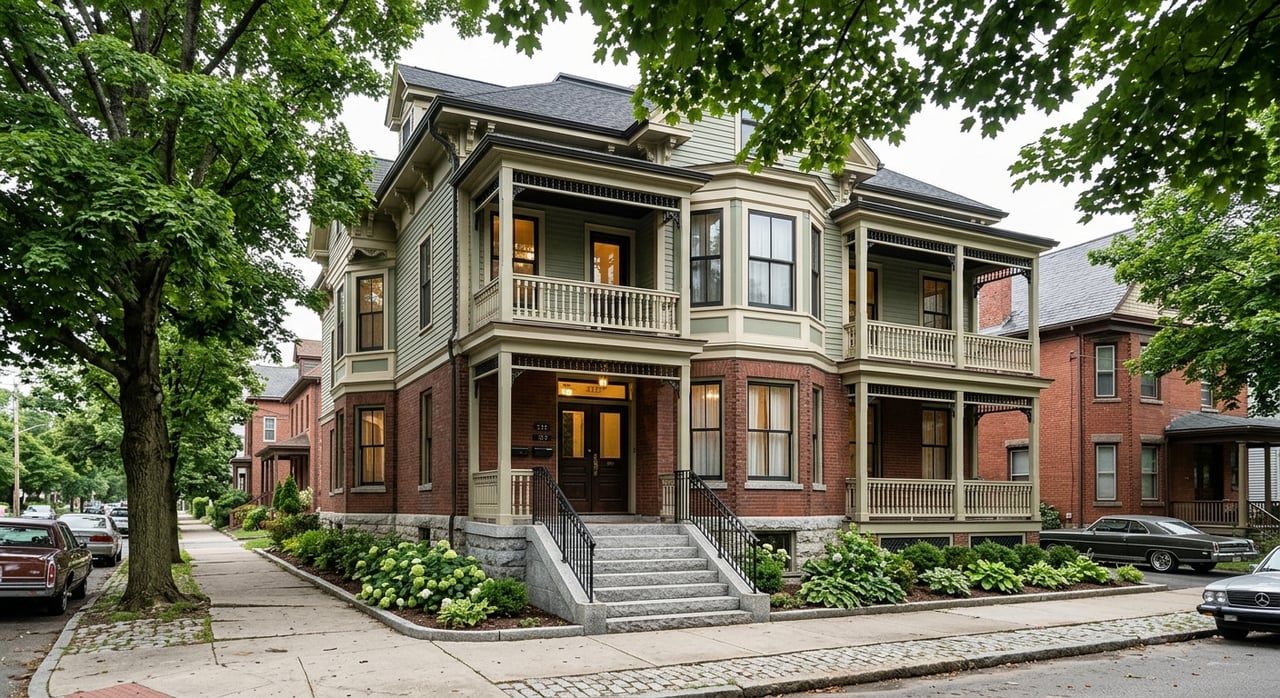
Smart Pricing Strategy for a Successful Somerville Home Sale
April 23, 2026
April 23, 2026
If you are selling in Somerville, pricing is not the place to guess. Even in a market that still leans toward sellers, the difference between a strong launch and a stale listing often comes down to how precisely your home is priced from day one. The good news is that with the right strategy, you can price to attract serious buyers, protect your leverage, and avoid costly time on market. Let’s dive in.
Somerville is still competitive, but it is not one single market. According to Redfin’s March 2026 Somerville market snapshot, homes sold in about 22 days, received 3 offers on average, and had a median sale price of $952,000. At the same time, Realtor.com’s February 2026 city overview showed 96 homes for sale, a median home sale price of $880,000, median days on market of 38, and a 100% sale-to-list ratio.
That gap matters. It tells you that broad city averages can be useful for context, but they are not enough to set your list price with confidence. In Somerville, smart pricing starts with recent, nearby sold data that reflects your ZIP code, your property type, and the buyers most likely to compete for your home.
A seller in 02144 is not competing in the exact same pricing environment as a seller in 02145. Realtor.com ZIP-level data shows meaningful variation across Somerville. In March 2026, 02143 had a median listing price of $798,000 and 36 days on market, while 02144 was at $1,022,000 and 26 days on market.
Meanwhile, 02145 moved more slowly. Realtor.com’s 02145 market overview showed a median listing price of $849,999, 36 active listings, 77 days on market, and homes selling at about 99% of asking. All three ZIP codes were still considered seller’s markets, but the pace and pricing benchmarks were clearly different.
The strongest pricing strategy for Somerville sellers is to use the freshest closed sales in your immediate market. That means matching comps by ZIP code, property type, size, condition, and likely buyer pool. It also means giving more weight to sold homes than to active listings, because sold data shows what buyers were actually willing to pay.
Property type is especially important in Somerville. The February 2026 MAR and ShowingTime report for Somerville showed a median single-family sales price of about $1.65 million, compared with about $977,500 for condominiums. If you compare a condo to a broad mix of homes across the city, or use single-family numbers to support a condo price, you can easily overshoot the market.
Even within Somerville, micro-markets can vary sharply. Realtor.com data for 02144 showed areas such as Powder House with a median listing price of $1,199,999 and West Somerville at $1,145,000, while 02143 showed a lower median listing price of $798,000. That is why a home in one pocket of the city should not be priced using broad averages from another.
The sold examples also show how wide the range can be. In 02143 recent sales, closings ranged from $507,000 for a one-bedroom at 94 Beacon St Apt 83 to $2,220,000 for 25 Avon St. Those numbers are not contradictory. They simply reflect different property types, sizes, and buyer expectations.
Active listings can tell you what sellers hope to get, but they do not confirm market value. In a market with limited inventory, it can be tempting to anchor your price to the highest active listing nearby. That approach often creates more risk than reward if your home does not have the same features, finish level, or buyer appeal.
In Somerville, recent closed sales usually offer the clearest pricing benchmark. They are also more useful because nearby ZIP codes are already behaving differently in price, pace, and buyer response.
Somerville remains supply-constrained, which helps sellers who price correctly. Realtor.com notes that less than 4 months of supply typically signals a seller’s market. Somerville was well below that threshold in the February 2026 MAR and ShowingTime report, with 1.2 months of supply for single-family homes and 1.3 months for condominiums.
That is a strong sign that sellers still have leverage. But leverage is not the same as unlimited pricing power. In a low-inventory market, buyers may move quickly for a well-priced home, yet they can also recognize when a listing is stretched beyond the evidence.
One of the biggest mistakes sellers make is assuming a higher starting price leaves more room to negotiate. In Somerville, the available data suggests the opposite is often true. In 02143 and 02144, homes sold for about asking on average, while 02145 was closer to 99% of asking.
That pattern points to an important takeaway. A well-calibrated launch price is often more effective than aggressive overpricing. If your home enters the market in the right buyer bracket, you are more likely to generate strong early interest, protect your negotiating position, and avoid sitting while buyers wait for a price change.
According to Redfin’s Somerville housing market page, many homes receive multiple offers and some buyers waive contingencies, with homes typically going pending in around 32 days. That makes the opening window especially important. If your pricing is sharp, the first weekend can create urgency and bring the strongest pool of buyers to the table.
If the price is too high, the market usually responds with fewer showings and slower activity. The issue is not just lost time. It is lost momentum.
Days on market can be one of the clearest signals that a price needs adjustment. In March 2026, 02143 was at 36 days on market, while 02144 was at 26. In contrast, 02145 showed 77 days on market.
That spread shows why pricing strategy should be tailored to your location and market segment. In a faster-moving pocket, buyers may respond quickly to a home that hits the market at the right number. In a slower-moving pocket, you may need an even more disciplined list price to avoid missing your best window.
If the showing traffic is soft after launch, a small early adjustment is usually easier to absorb than a large correction after the listing has aged. Buyers tend to read an older listing differently. A modest change early on can reposition your home into the right search bracket and bring it back into focus before the market starts to question it.
In practical terms, this is why pricing strategy should include a plan, not just a number. You want to know what data points you will watch in the first week or two and how quickly you will respond if buyer activity does not match expectations.
Offer deadlines can be effective, but only when your home is already positioned to attract multiple buyers quickly. In tighter markets such as 02144, where active inventory was 23 and median days on market were 26, a deadline can help concentrate attention. It works best when the price encourages broad interest rather than filtering buyers out.
In a slower pocket like 02145, a deadline alone is less likely to overcome weak pricing or thinner demand. Strategy has to match the market. A negotiation-first approach begins with list price, not just offer terms.
If you want to price strategically, focus on a few core steps:
In Somerville, the goal is not simply to name the highest possible number. It is to choose a price that invites the right buyers in, creates leverage, and gives you the best chance of a strong outcome.
Selling well in Somerville takes more than checking one market average and adding a premium. The market is still favorable to sellers, but the pricing window is narrow. The most successful launches are built on fresh sold comps, ZIP-level context, and a clear plan for how to respond once your home hits the market.
If you are thinking about selling, working with an advisor who understands micro-market pricing, presentation, and negotiation can help you avoid leaving money on the table. When you are ready for a tailored valuation and pricing strategy, connect with Guy Contaldi for a consultation.
Stay up to date on the latest real estate trends.


Whether buying, selling, or investing, I’m ready to put my decades of experience and client-first approach to work for you. Contact me today to get started with a trusted Boston real estate expert.